Blog

  • Thrilling White Water Rafting Locations in Africa

    If there is something the African continent was blessed with, its plenty of everything beautiful. Every country on this continent has something worth exploring, something that will give you an experience of a lifetime.
    Across the continent, there is something for everyone, including some of the best white water rapids that any thrill seeker would want to experience at some point on their adventures.

    Blue Nile Falls
    Cascading down from the Tana River, one of the major tributaries of the River Nile in Ethiopia, the Blue Nile Falls give you a spectacular experience with gorgeous views of the wildlife in the area. The rapids are classified as Class V.

    Mangoky River
    Madagascar is beautiful, magical and full of many unexplored wonders. The rafting experience here will take you through an adventure on the bubbly Mangoky River, whose surroundings are home to many different species of lemurs, butterflies and birds, You also get a chance to see baobab trees along the Class II rapids.

    Ahansel River
    Up the Atlas highs through Marrakech runs the Ahansel River,which gives birth to the Cascade D’Ouzoud, a phenomenal waterfall that will cost you approximately 30 Dirhams to paddle through for a good experience near the Ouzoud.

    Orange River

    No, the river is not Orange as its name suggests. It was named after the Dutch Royal House by Robert Jacob Gordon and has its origins from the Drakensberg Mountain. Orange River, or Senqu River, is the longest river in South Africa and is also ranked among the best locations for beginner or expert rafting experiences right from the Augrabies Falls. You will pay close to 4,000 rands for the full experience.

    River Zambezi
    The Zambezi is one of the longest rivers in Africa and is also home to one of the highest falls in Africa.

    The river is located in Zimbabwe with Class V rapids near the Victoria Falls, making them very conducive for a thrilling paddle adventure. White water rafting near the falls is very suitable for experienced rafters and not advisable for beginners.

    Rufiji River
    Formed by the confluence of Luwegu and Kilombero rivers, Rufiji is found in Tanzania, an East African country with unfound beauty. Though the rapids are rated at Class III, rafting along the river is worth experiencing with the surrounding scenic beauty along its shores.

    There are a number of other other locations you can choose from, including Manambloo and Breed rivers in South Africa, Tekeze and Omo in Ethiopia, among many others.

  • Ecotourists find Uganda as a New Hotspot

    Ecotourists find Uganda as a New Hotspot

    Tourism in Uganda is becoming a booming business! More and more people see Uganda as a holiday destination as more tours are being offered in the region. In 2012, Uganda was voted among the 10 best destinations to visit by the Lonely Planet.

    Compared to the more developed neighboring countries, Kenya and Tanzania, this troubled nation has been a slow starter in the region. Attributed to both domestic wars and political instability Uganda has not been visited by the mainstream tourists who have been taking safaris in Tanzania and Kenya.

    In 1998 a fatal tragedy shocked the country and the world, when several Western tourists were killed in a hostage drama near Bwindi Impenetrable National Park by the Interahamwe Rebels from the neighboring Rwanda. After this incident, the Uganda government has done a lot to tighten its security along its borders and in the past 14 years much has changed in the country. Tours are offered throughout Uganda and tourist explore the beauty that this unspoiled country has to offer. Uganda is eco-holiday destination number one.

    An Uganda holiday has it all. Stunning natural areas surrounded by cloud-covered mountains. Dropping valleys and gently sloping hills with flourishing green vegetation.

    With all that beauty you might be worried that it will all get lost if mass-tourism hits Uganda. But that is where Uganda is one step ahead of the rest. The government puts nature preservation before tourism, to keep the nature unspoiled and beautiful.

    All this talk of stunning beauty has gotten you curious, hasn’t it?

    Two random examples of an amazing holiday in Uganda that you can go on are an expedition on the Nile, or visiting the mystical mountain gorillas on a gorilla trek in Bwindi Impenetrable National Park.

    But there is much more!

    Many birders have visited Uganda! This country hosts more than 1065 bird species including rare birds like the Shoebill stork.

    So don’t hesitate! The beauty will blow your mind away!

    Many travelers ask questions about Uganda

    What is the safety factor for traveling in Uganda, working with villages, gorilla trekking etc.?

    Uganda is a safe destination. Just like other destinations around the world, take caution while traveling through cities where there might be pick pocketers, thieves, etc.

    What is the best time to visit Uganda?

    Uganda can be visited all year round. Travelers can visit the gorillas and enjoy game viewing all year round though many prefer to visit the country during the dry season.

    What is the best way to enjoy Safaris in Africa?

    With reference to the gorilla safaris – They are still going and have done without problems, but please bear in mind these are well organized group tours and are secure.

    What is the minimum age for gorilla trekking?

    The minimum age for Gorilla Trekking is 15 years of age and applies to ALL of the protected areas. You can find any information on gorilla trekking from www.gorillatrekkingguide.com

    How safe would you say white water rafting is? and what injections would you need for there if u were camping for most of the time?

    The rafting is a Grade 5 designation which means it can be pretty tough. A couple of different companies run the rafting in different spots and although the safety record and equipment used is good it is still a ‘extreme sport’. All care is taken obviously but nothing can be guaranteed when it comes to this type of activity.

    It is advisable to contact your local GP or Travel Clinic for the latest updates on required immunizations for Africa. I would recommend Yellow Fever (don’t forget to get the certificate) and some malaria protection at the least.

    Happy travels to Uganda, the Pearl of Africa!

  • 8 Tips for Packing and Traveling Lite

    In this day & age of travelling Africa, there’s a few packing tactics to employ. To cut out an extra thirty to forty minutes at the arriving airport, start with packing small luggage. Since carry-ons can not exceed a linear dimension of 45 inches, you can escape the fiasco of the baggage terminal by basically packing & travelling light. To learn how to pack all your needs into two suitcase, read more.

    How-to Pack & Travel Lite

    Make a list
    Compose a pack list. Be sure to coordinate shirts & blouses with bottoms. To maximize your travelling wardrobe fashion savoir faire, stick with solids & versatile basics. Rule-out any clothes that do not match other items.

    Use the following pithy packing tips to make your travel light:

    Gear up
    How to make an awe-inspiring impression out of a basic or mundane outfit? For the most glam appeal, accessorize with a vibrant tie (for him) or a florid scarf (for her). Multihued accessories can liven up just about any attire.

    Roll ’em up please
    The best way to fit all your clothes is by rolling pants & shirts. First fold each item in half. Then basically roll. To try to maintain any creases, start on the bulkiest end of the news story of clothing.

    Employ shoe smarts
    For men, any leather rubber-soled shoes can make the day & night transition, easy. For woman, a pair of flip-flops, strappy sandals & comfy wedges can serve all casual – chic dressing needs.

    Minimize bulk
    After you check for space, edit outfits – ruthlessly. Try to pack microfibers with wrinkle & stain free comfort. With most of your attire, stay in the same color scheme – in case you have to layer up for warmth.

    Put under garments on the top
    To reduce the embarrassment of under garments becoming the side show attraction of the open luggage scan, place all panties in a plastic bag free of any clippers, lighters or other questionable paraphernalia. For expedient security review, place the transparent bag on top of your other items so security can access the bag without ruining your efficient packing method.

    Lose Extra Baggage
    Leave the heavy travel guide at home. Duplicate important resources to keep your luggage free of extra pounds. Since most hotels & resorts provide irons & blow-dryers –leave yours at home for light travel.

    Leave restricted items at home
    If you want to make it through security extra speedy, avoid any firearms, weapons, box-cutters, scissors, razors, lighters & any other item that may be used in a terrorist situation.

  • African Airlines Set for Collective Losses of $100 million in 2016, IATA predicts

    African airlines are facing another year in the red, with the International Air Transport Association (IATA) predicting collective losses of approximately $100 million for 2016. This follows loss estimates of some $300 million for African carriers in 2015, according to the organization’s recently revised industry outlook, in which it projected that globally the world’s airlines are set to register around $33 billion in net profits for the year now closing.

    In an exclusive interview with AIN, IATA’s chief economist Brian Pearce said that the low commodity prices are seriously affecting airlines’ profitability in Africa. “It is disappointing,” he commented. “Africa has got a big potential but the continent seems to be moving in quite a difficult position at the moment principally because of the weakness of commodity prices which means much lower revenues for the economy. That stopped a lot of beneficial improvement in economy growth.”

    According to Pearce, Africa continues to be hit by regional conflict, social unrest and epidemics. “There is a list of things unfortunately that all come together and make it very difficult for airlines to prosper in Africa,” he said.
    Nonetheless, according to Pearce, there are still very good airlines in Africa held back by a high level of regulatory cost and government restrictions on market access. “That is why the majority of African passenger traffic is transported by non-African airlines,” said Pearce.

    According to IATA’s research, for African airlines the reduced fuel costs associated with the lower oil prices are not offsetting the negative effect of the wider drag on the region’s economy caused by falling income from commodities like oil. Pearce explained that local currency devaluations are undermining the carriers’ ability to benefit from the falling price of jet-A, since the fuel is priced in U.S. dollars.

    “We have seen in the past that airlines were able to make money when the price of oil is high,” said Pearce. “Oil is not the only factor. And indeed what we have seen in many African economies at the moment is that the exchange rate has fallen very sharply. For instance in Nigeria and South Africa. And that means that the dollar price of jet fuel is low but many African airlines are not seeing those benefits in local currency terms because of the exchange rate fall. Due to the currency devaluations, there has not been substantial fall in fuel cost.”

    The factors contributing to the losses sustained by African airlines are mostly external to the industry itself. Quite apart from the impact of lower commodity prices, violent conflict and social unrest in some countries are denting tourism demand. Pearce also claimed that government restrictions and high regulatory costs are impeding growth in the sector.
    IATA is projecting that, on average, African airlines will lose 93 cents per passenger per flight in 2016, representing a declining net margin of -0.5 percent. This contrasts with an anticipated global net margin increase of 5.1 percent (amounting to a $9.59 profit per passenger with overall net profits of $36.3 billion).

    “I think governments in Africa should see air transport as an engine of economic growth and development,” concluded Pearce. “And they need to facilitate the expansion of air transport which increases tourism, trade and create sustainable jobs in Africa.”
    IATA director general and CEO Tony Tyler highlighted inadequate airport infrastructure as another obstacles for airlines in Africa. At the same time, he expressed reservations about the viability of some planned airport developments, including Ndjamena in Chad, Addis Ababa in Ethiopia and Dakar in Senegal.

    “What we would like to see is that investment in better infrastructure takes place in a measured way after consultation with the users and what is built is appropriate and relevant to what the industry needs and is not building palaces which cost too much and are much bigger than what the industry needs at that time,” Tyler commented. “It is important that the airports that are built are the right size and not being built wastefully.”
    -AIN Online

  • Ethiopian Airlines to Fly 3-times weekly to Durban

    Ethiopian Airlines to Fly 3-times weekly to Durban

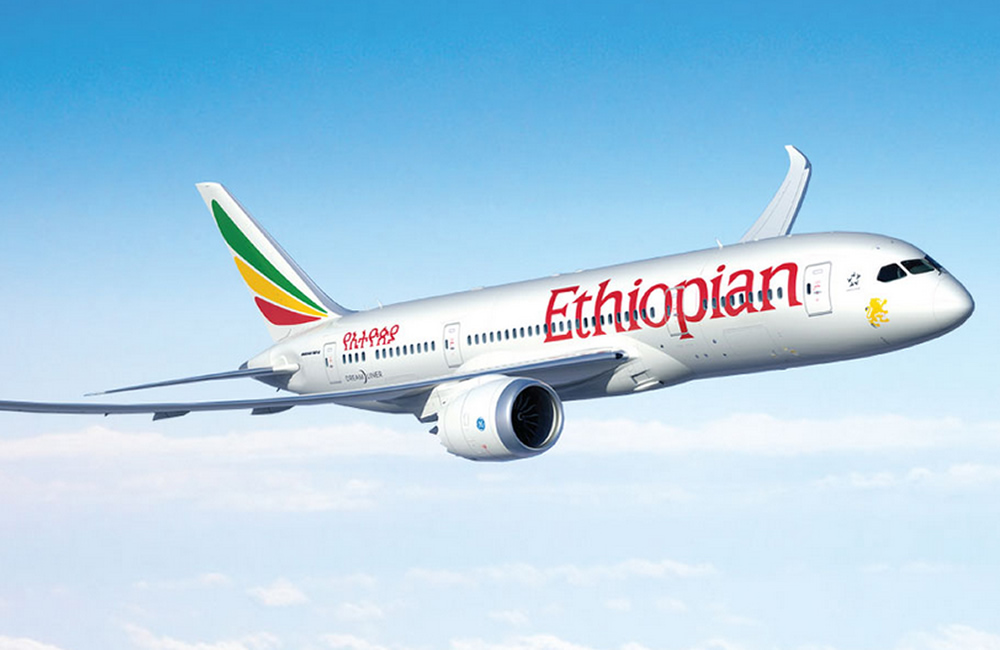
    Ethiopian Airlines (ET), the largest and most profitable airline in Africa, has announced the commencement of 3-times weekly flights to Durban effective 16th December 2015.

    Durban will be airline’s 3rd destination in South Africa after Johannesburg and Cape Town.
    Lead in low season fares start from £608 economy (46kgs baggage allowance) and business £2,238 (69kgs baggage allowance) including taxes.

    ET already offers daily connections from Heathrow to Johannesburg and 4 x weekly connections to Cape Town via its modern hub, Bole Intl. Airport, Addis Ababa.
    Durban is the second largest metropolitan city and the second most important manufacturing hub in South Africa. It is also one of the main tourism destinations in Africa because of the city’s warm subtropical climate and extensive beaches. Durban is an important gateway into South Africa; the new service will offer passengers more choice and flexibility and facilitate trade, investment, and tourism ties between Ethiopia and South Africa.

    Ethiopian Group CEO, Tewolde Gebremariam, said: “As a Pan-African airline working to bring Africa together and closer to the world, we are very pleased to spread our wings to our 3rd destination in South Africa. The new Durban service will give our customers more and convenient connectivity options when traveling both within and to and from the continent. We will continue to expand our reach within Africa with a view to supporting the continent’s socio-economic integration and development”

    Ethiopian is a global Pan-African carrier currently serving more than 91 international destinations across 5 continents with over 200 daily flights using the latest technology aircraft such as the B777s and B787s Dreamliner with an average fleet age of five years. Durban will be the airline’s 53rd African & 92nd International destination respectively.